ASIC mining profitability 2026 looks a lot worse than most buyers think. If you are paying normal retail power rates, the honest answer to is mining still profitable 2026 is usually no, not in the way people imagine. The market did not suddenly die. It just got tighter, harsher, and far less forgiving. Revenue per terahash fell, difficulty stayed brutal, power costs kept climbing, and a lot of buyers are still shopping with 2024 assumptions.
What changed in mining profitability in 2026
The biggest shift is hashprice. As of April 13, 2026, Hashrate Index reported a USD hashprice of about $33.25 per PH per day. That sounds like a statistic for analysts. In practice, it means a 200 TH machine is only pulling in about $6.65 in gross daily revenue before you pay for electricity, downtime, pool fees, repairs, or financing.
Difficulty pressure is the second punch. Even when the network hashrate wobbles for a week, the long trend is still brutal competition. More efficient fleets keep coming online, older machines get squeezed out, and the revenue pie gets split across more serious operators. That is why bitcoin mining profitability 2026 feels weaker even when BTC itself moves up.
Then there is electricity. Cambridge’s Bitcoin mining production cost model uses a default $0.05 kWh assumption. That is already a reminder that power is the whole game. Plenty of smaller buyers are nowhere near $0.05. They are closer to $0.08, $0.10, or worse once taxes, hosting fees, or cooling overhead are real. That gap is exactly why mining hashprice decline is turning so many “profitable” machines into break-even boxes.
Why most ASIC miners are no longer as profitable as expected
Most people do not buy off real mining economics. They buy off screenshots, outdated calculator snapshots, or seller hype. I keep seeing buyers assume that if a machine earned solid money six months ago, it still should today. That is not how this market works.

The first mistake is assuming gross revenue equals profit. It does not. If you have not already run your own numbers, start with our BTC mining calculator post because even small changes in power rate can erase profit fast.
The second mistake is treating ROI like a fixed timetable. Buyers still talk about a 12 to 18 month payback as if it is normal. On many SHA-256 machines in 2026, ASIC ROI 2026 is drifting into multi-year territory unless you have elite power pricing. If revenue softens again, that timeline gets even uglier.
The third mistake is using old mental models. A lot of people are still shopping like they were in the easy phase of the cycle. If you missed our breakdown on whether your ASIC miner is still profitable in 2026, read that next. It explains why a machine can look fine on paper and still disappoint badly in the real world.
Real profitability breakdown with numbers
Assumptions for a realistic April 2026 check
Let me keep this simple. I am using a hashprice of $33.25 per PH per day, roughly in line with April 13, 2026 market data. I am also using an electricity rate of $0.08 kWh because that is much closer to what a lot of buyers actually face once the real bill shows up.
| Miner | Hashrate | Daily Revenue | Power Cost | Net Profit |
|---|---|---|---|---|
| Antminer S21 | 200 TH/s | $6.65 | $6.72 | -$0.07 |
| Antminer S19 XP Hyd | 255 TH/s | $8.48 | $10.18 | -$1.70 |
| Antminer S21 Hyd | 319 TH/s | $10.61 | $10.29 | $0.32 |
That is the part new buyers keep missing. The machine is not the business. The spread between hashprice and your all-in power cost is the business. On numbers like these, an Antminer S21 only becomes meaningfully attractive when power is closer to $0.05 kWh, uptime is solid, and purchase price is disciplined. Otherwise the ROI timeline slips from “reasonable” into “why did I buy this?” very fast.
At $0.05 kWh, an S21 might clear about $2.45 a day. If you pay around $3,000 for the unit after freight and setup, you are staring at roughly 1,200 days of payback before maintenance risk. That is more than three years. At $0.08 kWh, ROI does not stretch. It disappears.

The biggest mistake new buyers are making right now
The biggest mistake is buying based on hype instead of buying based on survival math. People still get pulled in by launch excitement, headline hashrate, or one lucky calculator snapshot. Then they act shocked when their machine lands and the margin is paper thin.
- They use outdated revenue assumptions.
- They ignore how fast difficulty can push earnings lower.
- They underestimate electricity, cooling, and downtime.
- They treat ROI like a promise instead of a risk model.
If you want the blunt version, read our guide on buying ASIC miners in 2026. It is the same story I keep repeating to buyers: if your model only works with optimistic assumptions, it does not work.
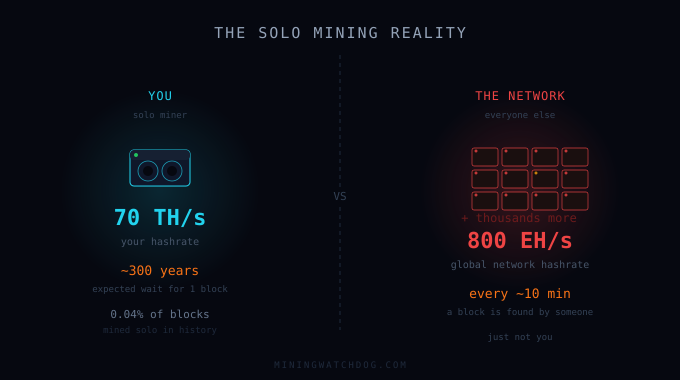
This is also why I tell people to stop romanticizing edge cases. A lot of miners asking why mining profits are dropping are still anchored to stories from a different market. The same goes for solo setups. If you are tempted by moonshot logic, go read the solo mining truth bomb before you confuse luck with profitability.
What I would actually do before buying an ASIC in 2026
I would slow down and assume my first profitability model is too optimistic. That one habit alone would save a lot of buyers from bad purchases.
- Run revenue using current hashprice, not last quarter’s screenshot.
- Model power at the rate you will actually pay, not the rate you wish you had.
- Stress test ROI with lower revenue and a couple of weeks of downtime.
- Compare the machine against alternatives instead of falling in love with one spec sheet.
I would also sanity check my assumptions against different machine classes. That is one reason I like pointing buyers to our VolcMiner review. Not because it is the same algorithm, but because it shows how quickly a machine can look exciting until you put real operating conditions around it.
And before I spent a dollar, I would compare my scenario against our existing numbers on current ASIC profitability and the live-style assumptions in the BTC mining calculator breakdown. That is how you avoid buying a machine that only looks good in marketing copy.
Best ASIC options that still make sense right now
There are still viable machines in 2026. You just have to stop pretending every SHA-256 unit is a winner. If I were browsing the SHA-256 ASIC miners category right now, I would focus on efficient hardware with realistic entry pricing and a clear power plan.
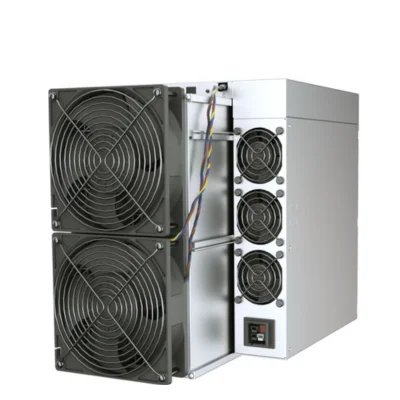
The Antminer S21 still makes sense for buyers who have genuinely cheap electricity and want a mainstream SHA-256 machine with a cleaner efficiency profile than older gear. The Antminer S19 XP Hyd can still be interesting in the right setup, but I would be much more careful with it because water-cooled hardware and higher power draw punish sloppy operators faster.
That is the tone buyers need in 2026. Realistic, not promotional. A good ASIC is not a magic machine anymore. It is a narrow-margin business tool, and if your costs are wrong, even a strong model becomes dead weight.
Most ASIC miners are not quietly becoming unprofitable because mining is over. They are becoming unprofitable because buyers keep using lazy assumptions in a market that no longer forgives them. If your economics only work on paper, you do not have an investment. You have a very expensive lesson.